How can you optimize energy consumption and process performance with Industrial IoT (IIoT)? All the details for real-time monitoring, automation, and efficiency are in this guide!
IIoT (Internet of Things), which lies at the heart of industrial digitalization, is now making not only home devices but also production lines, energy systems, and factory operations smart. Especially thanks to IIoT (Industrial Internet of Things) solutions, energy efficiency, process control, and production optimization are now moving far beyond manual monitoring systems.
In this article, we will examine in detail the impact of IIoT technologies on energy tracking, monitoring of production processes, and data-driven decision-making systems. We will explore all aspects of how you can reduce costs and increase efficiency through real-time data flow, cloud platforms, sensor integration, and AI-powered analytics.
The Industrial Internet of Things (IIoT) is a digital network system that enables physical devices in production and infrastructure systems to connect to the internet and exchange data with one another. Thanks to this structure, machines, sensors, meters, and other equipment work in synchronization, data is transferred to central platforms, and processes are analyzed and optimized in light of this information. IIoT provides businesses with multi-dimensional advantages such as production volume, equipment health, process quality, and efficiency, rather than just energy tracking.
Unlike traditional control systems, IIoT systems form the foundation of digital transformation with capabilities such as real-time data flow, remote monitoring, automated decision-making, and predictive maintenance. These systems—where smart sensors, edge computing devices, powerful communication protocols, and cloud-based analysis software work in an integrated structure—make production facilities more predictable, secure, and sustainable, thereby reducing costs and maximizing operational efficiency.
Sensors integrated into machines and equipment instantly measure variables such as temperature, pressure, vibration, and energy consumption. This makes it possible to monitor processes without the need for manual intervention.
Edge devices, which perform a preliminary analysis of data in the field before sending it to the cloud, both reduce network load and prevent latency, offering the opportunity for rapid decision-making. This is of critical importance, especially for situations requiring instant intervention.
Collected data is stored and visualized on a central cloud platform. These systems offer the possibility to monitor and compare all equipment in different locations from a single point. They also provide advantages in backup and scalability.
Thanks to instantaneous data transmission, IIoT systems ensure that all parameters, from energy consumption to production speed, are tracked immediately. This helps in detecting production delays or system failures at an early stage.
By detecting deviations and anomalies in machine data, potential failures are identified in advance. This minimizes unplanned downtime, reduces maintenance costs, and extends equipment life.
Energy stands out as one of the largest items of operating costs, especially in the manufacturing sector. The continuous operation of production lines, motorized equipment, HVAC systems, and lighting infrastructure results in high energy consumption. Therefore, correct management of energy costs is of critical importance for both financial sustainability and environmental impact. In line with rising energy prices and sustainability goals, businesses need integrated and data-driven systems that go beyond traditional energy tracking methods.
Real-time monitoring, automated analysis, and seamless process management, all in one!
Click to examine our IIoT-supported energy tracking system in detail.
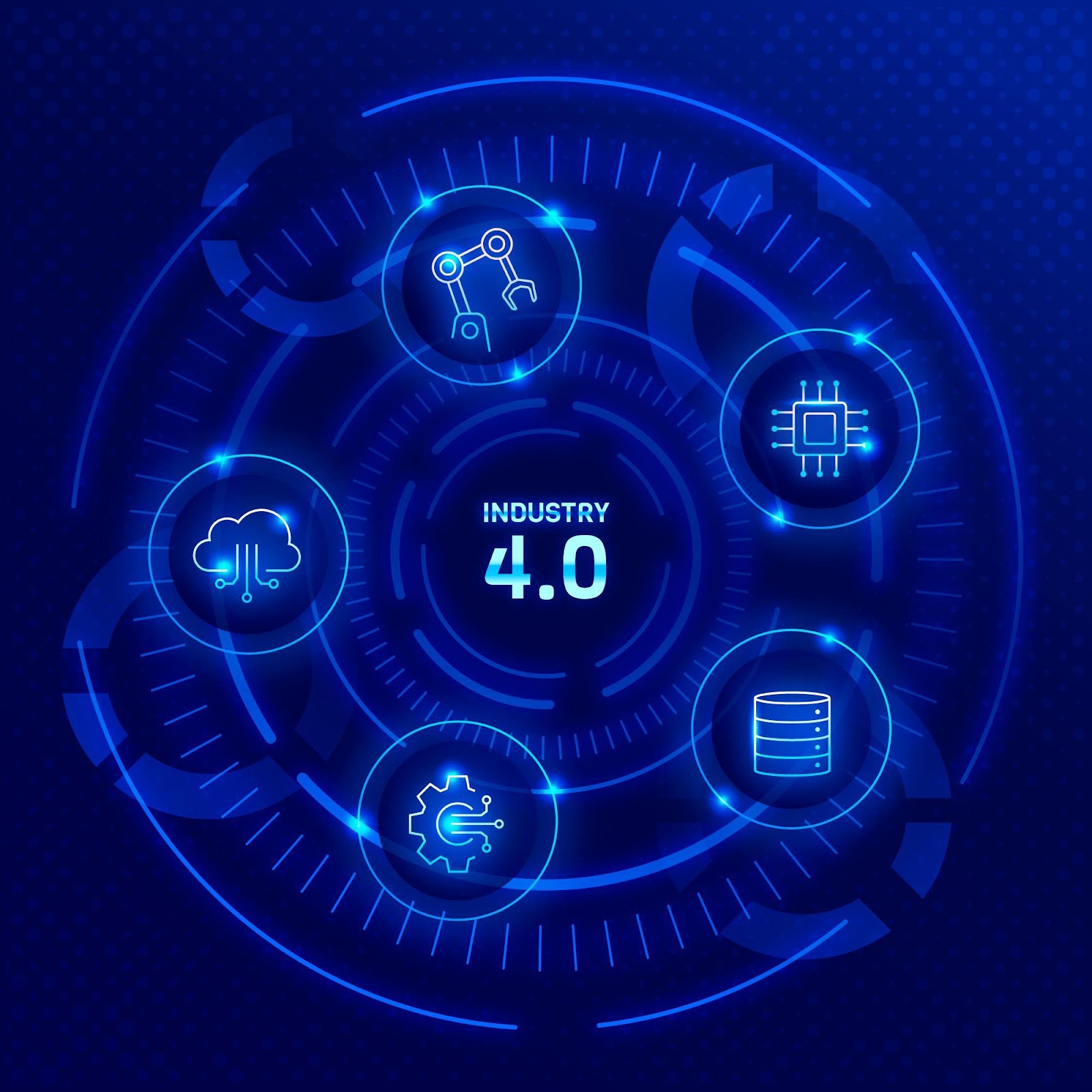
At this point, Industrial IoT (IIoT) based solutions allow for not only observing energy usage but also optimizing it in real-time. Thanks to smart sensors and connected devices, the energy consumption of each piece of equipment can be monitored instantaneously, inefficient systems can be identified, and immediate interventions can be made. Furthermore, IoT systems can analyze consumption patterns and activate automation scenarios that will make energy usage most efficient. In this way, operational efficiency increases while costs are reduced by preventing unnecessary energy waste.
Thanks to these systems:
Additionally, IIoT stands out not only with monitoring but also with its automation capability. For example, scenarios can be created such as automatically shutting down the relevant system when energy consumption exceeds a certain threshold.
IIoT (Industrial Internet of Things) is not limited to monitoring energy consumption; it also makes it possible to digitally track and analyze all operational processes on the production line. Thanks to sensors integrated into production machinery, numerous critical data points such as temperature, vibration, speed, pressure, and usage time are continuously collected. This data provides detailed information about the performance of the machines without the need for manual observation and allows for more efficient management of processes.
All collected data is brought together and analyzed in central IIoT software and visualized on custom business dashboards. These systems automatically perform many functions such as predicting machine failures, detecting imbalances in production speed, and optimizing equipment utilization rates. Thus, managers can effortlessly access all the data they need—not just for historical reports, but also for instant interventions and developing forward-looking improvement strategies. This structure both increases production quality and prevents operational disruptions.
As a result:
One of the greatest advantages of IIoT-based systems is that they do not merely collect data; they possess the ability to make instant decisions based on that collected data. Data coming from machines, sensors, and equipment in the field is continuously monitored, and the system automatically generates alerts when pre-defined threshold values are exceeded. Thanks to these alerts, human errors are minimized, and potential malfunctions or security risks are detected in advance, allowing processes to be managed without interruption.
This approach brings an "proactive" and even "autonomous" operational logic, moving beyond traditional "reactive" methods—intervention after a problem occurs. For example, automation scenarios such as ventilation systems activating automatically when the ambient temperature reaches a certain level, or shutting down certain devices when energy consumption spikes suddenly, provide maximum control and efficiency in production and energy processes.
The system sends instant alarms to operators when pre-defined threshold values are exceeded. This allows for rapid intervention in dangerous situations. Alarms can be presented as audible, visual, or mobile notifications.
Specific scenarios can be triggered after analyzing data from sensors. For example, if the temperature rises too high, ventilation opens; if humidity drops, humidifiers activate. In this way, the system gains the ability to manage itself.
Performance drops in equipment are noticed early thanks to instant monitoring. Thus, precautions are taken before failures escalate, preventing unplanned downtime and production delays.
In many cases, IIoT systems can sustain the process through automation without the need for an operator. This both reduces labor costs and ensures 24/7 continuous operation.
Real-time monitoring can be performed not only from within the facility but also remotely via cloud systems. Authorized personnel can monitor and intervene in the system from any location.
Collected data is not just for monitoring; it is analyzed to make meaningful decisions. Thanks to artificial intelligence and machine learning algorithms:
Through these analyses, data-driven decision-making processes are strengthened, and operational efficiency increases.
Contact us to integrate industrial IIoT solutions into your processes and reduce your energy costs.
Reach out to us now, and let’s prepare your factory-specific digital transformation plan together.
Industrial IoT (IIoT) systems do more than just monitor and report energy; they create tangible cost advantages through automation scenarios and data-driven improvements that directly provide energy savings. Real-time sensor data makes it clear exactly how much energy each piece of equipment is consuming. This allows for the easy detection of unnecessary consumption and the rapid prevention of energy losses. Smart systems enable more efficient energy use through functions such as automatic device shutdown, load balancing, and tariff-based optimization.
Furthermore, IIoT solutions reduce costs by improving overall process performance rather than focusing solely on energy. For example, production continuity is ensured through the identification of bottlenecks in production lines, monitoring of equipment efficiency, and predictive maintenance applications. Consequently, unplanned downtimes are reduced, maintenance costs decrease, and human resources are utilized more effectively. Ultimately, IIoT systems both increase operational effectiveness and create a sustainable cost structure.
Cost reductions are particularly prominent in these areas:
In essence, IIoT is not just a technology; it is a management tool that accelerates the return on investment (ROI).
Industrial IoT (IIoT) solutions offer significant benefits for environmental sustainability as well as increasing production efficiency. Thanks to a system structure that boosts energy efficiency:
This allows businesses to keep their environmental impact under control and quickly fulfill compliance processes with environmental regulations.

Additionally, IIoT systems automatically collect and report the energy data required for sustainability-focused documentation and international standards. For example, all measurements necessary for the ISO 50001 energy management standard or green building certifications like LEED are continuously monitored and fully recorded by the system. This structure both creates an environmentally conscious brand image and ensures that legal obligations are managed digitally.
Through IIoT, the energy consumption of equipment is monitored in real-time. Machines operating more than necessary or systems left idling are quickly identified, preventing resource waste.
Efficient energy use and automatic control systems significantly reduce carbon emissions. This lowers the business's environmental impact and makes it easier to achieve sustainability goals.
Energy data required for compliance with environmental standards such as LEED, BREEAM, and ISO 50001 can be automatically monitored and reported with IIoT systems. This results in documentable environmental performance.
IIoT systems visualize sustainability metrics (energy intensity, water usage, waste production, etc.), ensuring regular tracking of environmental performance. This data also plays an active role in decision-making processes.
The system automatically activates when pre-determined threshold values for environmental factors such as temperature, humidity, or gas emissions are exceeded. This minimizes environmental risks while reducing the need for human intervention.
It is managed by system operators, energy managers or IT departments.
Many sectors such as manufacturing, energy, logistics, automotive, food, and building management can use them.
Energy consumption of each piece of equipment can be monitored in real-time using smart sensors and meters.
Devices can be automatically controlled by creating data-dependent scenarios (e.g. ventilation by temperature).
The investment cost is moderate, but it pays for itself in a short time through the savings it provides.
Data security can be ensured through encryption, user authorization, and secure network infrastructure.
IIoT is the IIoT technology used in industrial applications. It focuses primarily on production and energy management.
Some edge computing devices can perform local processing, but cloud integration increases efficiency.
Yes, energy efficiency and emission control can be easily managed with these systems.
Potential failure symptoms are identified in advance by monitoring machine data, and maintenance is scheduled accordingly.