How is Energy and Carbon Tracking Performed under CBAM (Carbon Border Adjustment Mechanism)? Learn step-by-step about data collection, analysis, monitoring, and sustainability strategies in production facilities.
With the strengthening of global sustainability goals, the concepts of CBAM compliance, carbon tracking, energy management, sustainable production, carbon emission measurement, and digital energy monitoring have become the new language of the manufacturing world. The Carbon Border Adjustment Mechanism (CBAM), implemented by the European Union, is no longer just an environmental policy but is positioned as a fundamental dynamic of trade. This regulation mandates producers to transparently report the energy sources they use, carbon emissions from production processes, and the environmental impacts of their supply chains.
In short; CBAM compliance is a "green passport" for every business wanting to participate in the European market in the future. To obtain this passport, energy and carbon data must be accurate, traceable, and digitally manageable.
CBAM (Carbon Border Adjustment Mechanism) is the European Union's policy aimed at taxing the carbon intensity of imported products. The objective is to ensure a fair competitive environment between producers subject to carbon reduction within the EU and those outside the EU.
This regulation:
Initially covering sectors such as steel, aluminum, fertilizers, cement, hydrogen, and electricity, CBAM will be expanded in the coming years to include energy-intensive sectors like chemicals, glass, and textiles.
Within this scope, starting in 2026:
In this way, the competitiveness of high-carbon emission products will decrease, while businesses engaged in low-carbon production will gain a significant advantage.
Energy and carbon tracking is one of the most fundamental requirements under CBAM (Carbon Border Adjustment Mechanism). This is because every kilowatt-hour of energy used in production processes corresponds to a certain level of carbon emission. Detailed monitoring of energy usage identifies which processes generate high emissions, paving the way for both environmental and economic improvements.
Furthermore, carbon tracking does not just ensure compliance with regulations; it also provides companies with a strategic advantage. Through proper energy management, unnecessary consumption is prevented, carbon costs are lowered, and businesses reach their sustainability goals faster. In short, energy and carbon tracking is the unseen engine of the green transformation.
Tracking energy data shows:
These data form the foundation of both energy saving and carbon reduction strategies.
In short, energy and carbon tracking contributes directly not only to the environment but also to the business economy.
The CBAM-compliant production model consists of a systematic monitoring plan, not random measurements. The foundation of this plan involves measuring energy consumption at the source, calculating carbon emissions, and reporting this data in a verifiable manner. Thus, every production step transforms into a data-driven structure.
When all these steps are automated via digital energy monitoring platforms, significant savings are achieved in both time and cost.
The foundation of CBAM-compliant energy management relies on collecting accurate and complete data. Thanks to energy analyzers, digital meters, IoT sensors, and SCADA systems, the energy flow in production lines becomes monitorable within milliseconds. This offers a far more accurate, transparent, and sustainable approach compared to manual recording methods.
The data collected not only shows energy consumption; it also reveals which equipment is operating inefficiently, which shifts consume the most energy, and which sections create a carbon load. Therefore, digital data collection is both the starting point for energy optimization and the reliable source for CBAM reporting.
Factors to consider when collecting data:
This infrastructure fulfills the verifiable data requirement, which is the most important requirement under CBAM.
Carbon calculation is the process of converting data obtained from energy consumption into $CO_2$ equivalent. Each energy type "electricity, natural gas, coal, or diesel" has a specific emission factor. Using these factors, the total carbon footprint of the production process is calculated, and the amount of "embedded carbon" per product is determined.
The monitoring process ensures the continuous tracking of this emission data. Thanks to real-time monitoring, carbon-intensive processes are detected early, and precautions are taken. This both reduces the environmental burden and ensures the business meets its CBAM obligations accurately and on time.
For example:
Using these values, the carbon intensity per unit of production (e.g., per ton of product) can be calculated. This data is used as the "embedded carbon" indicator in CBAM reporting and provides product-based transparency.
Digital transformation is inevitable for achieving CBAM compliance. The correct technological infrastructure makes it possible to manage the entire process—from energy measurement to data analysis, reporting, and archiving—in an integrated manner. At the center of this infrastructure are Energy Management Software (EMS), AI-supported monitoring systems, and automatic reporting tools.
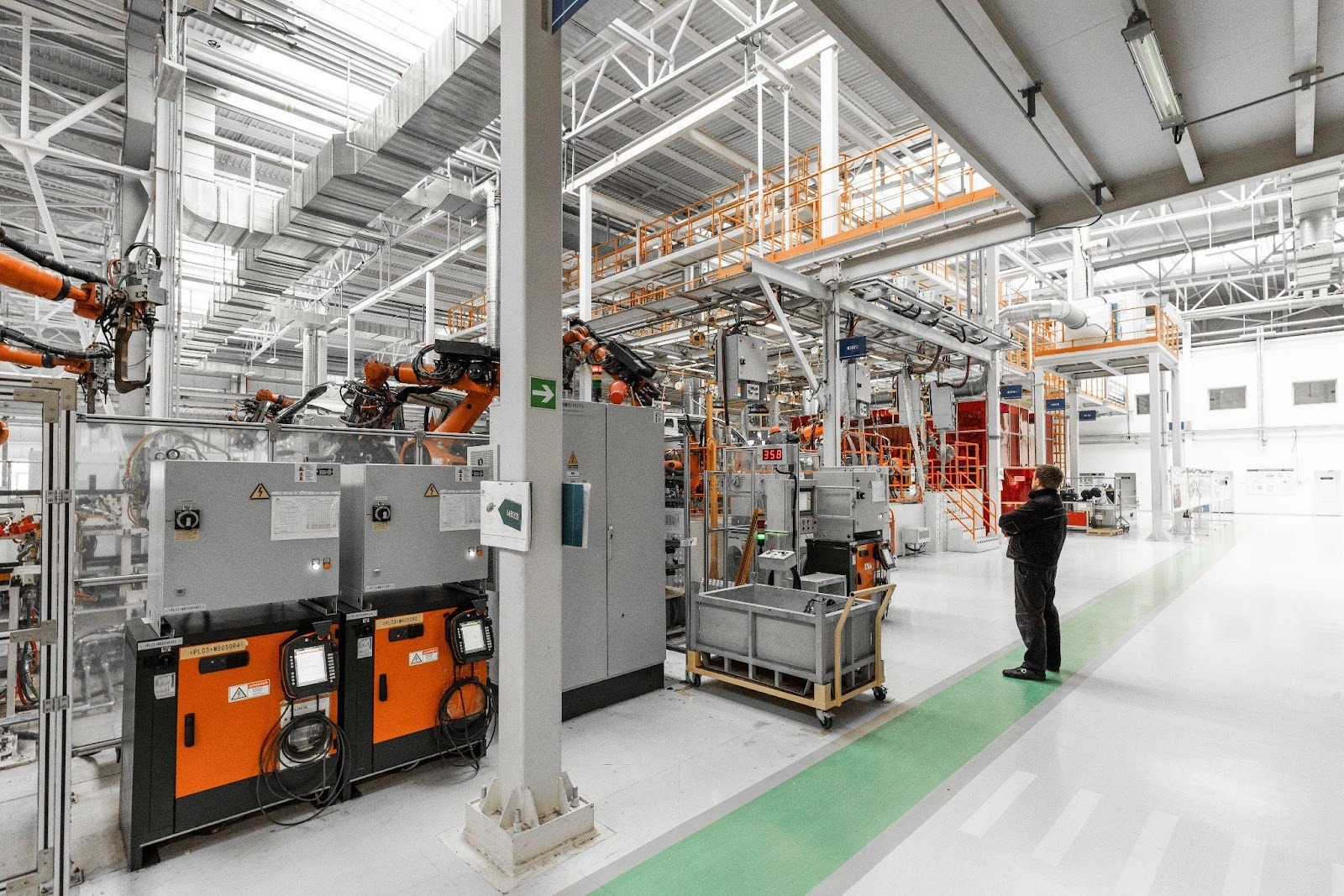
Such an infrastructure monitors the entire production line without the need for manual data entry. Instantaneous energy consumption data is combined with carbon emission calculations and reported in a CBAM-compliant format. This provides businesses with both time savings and ease of auditing.
The basic tools used in this context are:
These technologies reduce manual workload while ensuring fast and error-free data management.
CBAM covers not only emissions within the facility but also the carbon created by suppliers involved in the production process. Therefore, transparency in the supply chain is an indispensable part of sustainable production. Companies are obliged to obtain carbon data regarding energy sources and production processes from their suppliers.
By integrating this data, the "product-based carbon footprint" can be fully calculated. This process is digitally managed through supply chain management software and blockchain-based verification systems. As a result, both the business and its suppliers establish a sustainable production ecosystem.
Therefore:
This approach is known as "Scope 3 Emission Tracking" and will become mandatory in post-2025 CBAM audits.
CBAM compliance is not just a regulatory obligation but also a strong competitive advantage. Businesses that increase energy efficiency, monitor, and report carbon emissions both reduce their costs and rise to the status of a sustainable brand in the European market.
In short, complying with CBAM is not just about "following the rules"; it is an investment in the future.

CBAM is reshaping the future of the global manufacturing world. Businesses that digitize energy and carbon tracking are not only complying with regulations but are also transitioning to a more efficient, low-cost, and environmentally friendly production model.
You cannot manage what you cannot measure. CBAM-compliant energy and carbon tracking determines not just today's, but also tomorrow's competitiveness.
The European Union aims to prevent carbon leakage by leveling the carbon footprint of imported products. This way, it encourages low-carbon production.
In the first phase, cement, fertilizers, iron-steel, aluminum, hydrogen and electricity; later, the chemical, glass and paper sectors will be included.
The transition period began in 2023 and runs until 2025; the full application period will commence in 2026.
Because the energy used in every production step directly translates to carbon emissions. It's not possible to comply with CBAM without tracking this data.
It is calculated by multiplying energy consumption (kWh, m³ etc.) and emission factors. For example 1 kWh ≈ 0.43 kg CO₂.
SCADA üretim süreçlerini izlerken, ERP genel iş yönetimini kapsar.
Energy Management Systems (EMS), IoT sensors, Analyzers, AI-supported reporting, Cloud-based monitoring platforms
Yes. CBAM also covers the carbon footprint of the supply chain. Therefore, suppliers are also obliged to share data.
SMEs can collect data using simple digital monitoring software and simplify the reporting process by receiving consultancy services.
In case of non-compliance, exports to the EU may be restricted or products are subjected to a carbon charge (or carbon tax/levy)
Energy efficiency, carbon reduction, and digital reporting will now become an indispensable part of production. Compliance will determine the competitiveness of brands.