Predict failures, reduce costs and improve efficiency with data-driven maintenance strategies in smart facilities. Discover the power of smart maintenance with IoT, SCADA, AI and analytics.
Smart facility management, process automation, data-driven maintenance, predictive maintenance, SCADA systems, and industrial IoT are the most important concepts shaping the digital transformation of today's manufacturing world. With the Industry 4.0 era, production lines are no longer just systems where physical assets operate; they have transformed into integrated platforms equipped with sensors, which analyze data and can make autonomous decisions.
While the traditional maintenance approach intervenes when a breakdown occurs, data-driven maintenance strategies predict potential faults in advance and minimize production losses. In this way, businesses both increase operational efficiency and reduce the cost of unexpected downtimes. With the convergence of Artificial Intelligence and IoT technologies, facility management has evolved into a maintenance approach that is not only planned but also predictive and smart.
Smart facility management is a holistic management approach resulting from the integration of production and maintenance processes with digital technologies. In this model, the entire infrastructure of the facility—energy systems, production lines, maintenance modules, security units, and environmental sensors—is monitored and optimized via a single platform. This ensures not only production continuity but also energy efficiency, occupational safety, and operational sustainability.
Smart facilities have transformed into an ecosystem that constantly generates data thanks to sensors and IoT devices. This data is analyzed via SCADA systems or cloud-based management software, providing strategic insights to managers. Consequently, processes based on manual intervention are replaced by automatic decision mechanisms. This makes production faster, maintenance more predictable, and the facility safer.
In this structure:
As a result, energy efficiency, operational security, and maintenance continuity become manageable under a single ecosystem.
Digital transformation in process management enables the end-to-end monitoring, measurement, and optimization of production processes. While operators guided production through manual control in traditional processes, digitized systems have become capable of self-regulating processes through sensor data and artificial intelligence analysis. This allows parameters such as quality control, energy consumption, and machine performance to be optimized instantly.
Automation, data analytics, and AI-based process optimization lie at the heart of this transformation. Smart process management not only increases production quantity but also manages raw material usage, energy consumption, and maintenance scheduling in a data-driven manner. Thus, businesses gain a cost advantage and move one step closer to a production mindset approaching zero defects.
For example:
This transformation forms the basis for transitioning from reactive production to proactive production. Thus, businesses optimize not only production but also quality and continuity.
Data-driven maintenance is a modern maintenance approach that enables the prediction of potential faults in advance by analyzing operational data collected from machines. This strategy ensures that maintenance is performed not only at planned intervals but also according to the real-time health of the machine. This reduces unnecessary maintenance procedures, prevents unexpected downtimes, and preserves production efficiency.
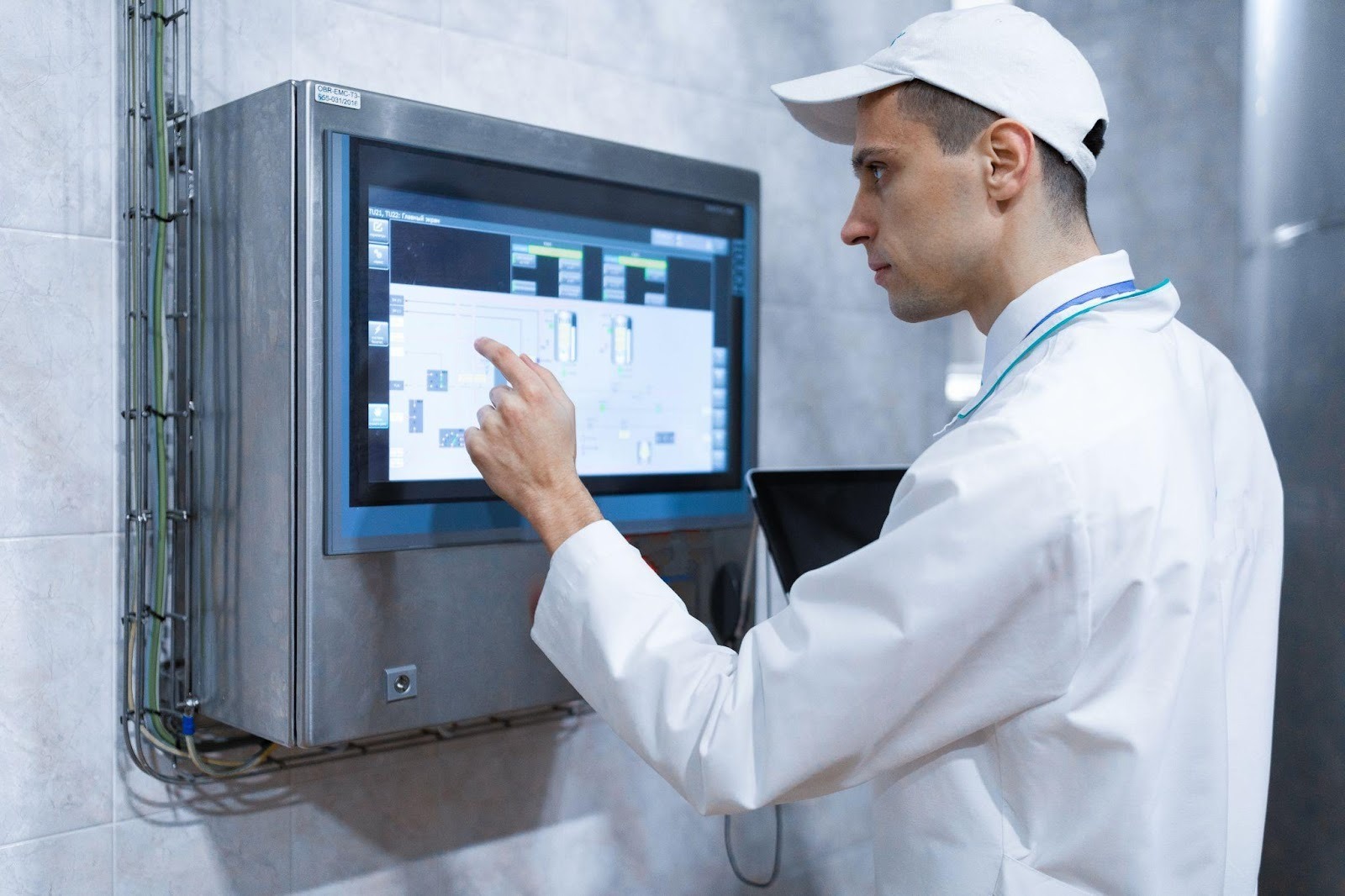
The foundation of this approach lies in IoT sensors, SCADA systems, and machine learning algorithms. Data obtained from the instant measurement of parameters like vibration, temperature, current, and pressure is analyzed to determine the likelihood of faults. As a result of these analyses, maintenance teams can intervene on the right equipment at the right time before a breakdown occurs. In short, data-driven maintenance moves businesses from the stage of "post-failure intervention" to "pre-failure management."
Thanks to data-driven maintenance:
This strategy goes beyond the classical periodic maintenance approach and is based on the principle of "the right intervention at the right time."
Predictive maintenance is the most advanced form of data-driven maintenance. In this method, data such as temperature, vibration, sound, current, and pressure, gathered from machine sensors, is continuously analyzed. Artificial Intelligence algorithms detect anomalies in this data and predict the risk of failure in advance.
For example, when there is a deviation from the norm in a motor's vibration frequency, the system automatically creates an alarm. This allows teams to perform the necessary maintenance without waiting for the motor to completely shut down. This method can reduce production losses by up to 30% and significantly lower maintenance costs.
SCADA (Supervisory Control and Data Acquisition) systems collect data from sensors across the entire facility, providing operators with real-time visibility. This data includes metrics such as production performance, energy consumption, and equipment health.
IoT sensors serve as the eyes of this system. Vibration sensors detect bearing failures, thermal sensors pinpoint overheating, and pressure sensors identify system leaks in advance. Thanks to these sensors, maintenance decisions become entirely data-driven, rather than intuitive. Consequently, the integration of SCADA and IoT minimizes errors, accelerates maintenance processes, and enhances equipment safety.
The biggest advantage of data-driven maintenance is its ability to minimize unplanned downtime. Thanks to real-time monitoring, system anomalies are detected early, allowing intervention before the production line is interrupted. This reduces not only production losses but also maintenance costs that may occur throughout the equipment's lifetime.
Furthermore, this system increases operational efficiency while reducing energy consumption. Faulty or inefficiently operating equipment consumes more energy. Data-driven systems detect these losses, preventing energy waste. Additionally, the automatic creation of maintenance plans reduces human error and makes maintenance processes safer. All these factors provide businesses with both financial and environmental sustainability.
Key advantages:
These advantages provide businesses with both cost reduction and a competitive edge.
Artificial intelligence (AI) is the foundation of the decision support system in maintenance processes. Machine Learning (ML) models analyze past failure data and identify the conditions that have the potential to cause recurrent failures. This allows maintenance teams to plan preventive actions.
Furthermore, AI-based algorithms continuously learn the system's operating conditions and increase their accuracy over time. This concept of "learning maintenance" constantly optimizes maintenance processes. In the future, these models will even reach the level of automatically adjusting production plans based on energy efficiency.
In modern industrial enterprises, digital maintenance platforms are the heart of data-driven management. These platforms integrate data from systems like SCADA, ERP, MES, and energy monitoring into a single center to manage maintenance processes holistically. This makes the work history, performance graphs, and maintenance records for every piece of equipment instantly accessible.
The most important benefit of this integration is that it prevents information from getting lost across dispersed systems. Since all data is collected on a single platform, coordination among teams increases, maintenance planning is optimized, and decision-making processes are accelerated. Furthermore, digital platforms can determine maintenance priorities through AI-supported analysis, resulting in significant savings in both time and cost.
This allows:
This integration makes not only the maintenance departments but the entire production ecosystem more agile.
Data-driven maintenance directly impacts not only production efficiency but also energy efficiency. Inefficiently operating motors, faulty sensors, or unstable processes lead to energy waste. This situation both increases costs and raises carbon emissions.
This waste can be prevented thanks to digital maintenance systems. Maintenance processes are integrated with energy analysis to support sustainable production. This provides long-term benefits for both the environment and the business economy.
After 2025, the concept of prescriptive maintenance will come to the forefront in facility management. This approach not only predicts the fault but also recommends the most appropriate intervention. Thanks to artificial intelligence, digital twin technology, and big data analytics, maintenance processes will become completely autonomous. Smart facilities will be equipped with systems that are self-monitoring and self-optimizing. Thus, the era of "reactive maintenance" will be completely left behind, and self-managing manufacturing facilities will become the new industry standard.

Data-driven maintenance operations are the digital heart of smart facilities. With the support of IoT sensors, SCADA systems, and artificial intelligence, facility management is now moving forward with strategies guided by data, not intuition. This transformation both increases production safety and maximizes energy efficiency. The production facilities of the future will be talking about data-focused solutions, not maintenance problems.
It is a maintenance method that predicts failures in advance by analyzing the sensor data of machines.
It is the management of energy, production, maintenance and safety processes from a single platform with digital technologies.
Artificial intelligence analyzes the data from the sensors, notifying in advance the failures that may occur in the equipment.
It collects sensor data throughout the facility, allowing operators to monitor equipment status in real time.
It keeps equipment health under constant control by monitoring values such as vibration, temperature, pressure.
It reduces unplanned downtime, reduces costs, extends machine life and improves energy efficiency.
Estimates possible risks and determines optimal maintenance time by analyzing historical failure data.
Combines different data sources, ensuring holistic and automated management of maintenance processes.
Reduces carbon emissions and promotes environmentally friendly production by preventing energy waste.
Self-managed, AI-powered, autonomous facilities and digital twin-based care strategies.