Predict failures, reduce downtime, and increase efficiency with AI-powered maintenance management. Discover preventive maintenance strategies in the Industry 4.0 era.
Maintenance management in industrial production processes is one of the most critical factors that directly affect the continuity and efficiency of businesses. However, traditional maintenance methods usually intervene after a breakdown occurs, leading to production stoppages, increased costs, and time loss. Artificial intelligence (AI) emerges as the pioneer of a transformation that fundamentally changes this cycle. Now, systems can intervene not only when they break down but also before a fault occurs, offering proactive solutions.
AI-supported maintenance management analyzes data from sensors and machines to predict potential faults in advance, optimize maintenance plans, and ensure the uninterrupted operation of the production line. This approach not only increases energy efficiency and cost control but also extends the life of the machinery, strengthens occupational safety, and supports sustainable production. In short, maintenance has moved from being an "intervention process" to a predictive strategy managed through smart systems.
Maintenance management, artificial intelligence, failure prediction, preventive maintenance, predictive maintenance, and industrial efficiency have now become the fundamental concepts of the modern manufacturing world. With Industry 4.0, digitized production facilities are focusing on optimizing not only production speed but also operational continuity and machine health.
In traditional maintenance methods, machines were intervened after a failure occurred. This led to both time loss and increased costs. However, thanks to Artificial Intelligence (AI) supported systems today, machines can analyze their own status, predict possible failures in advance, and even offer solution suggestions.
The concept of predictive maintenance is at the heart of this transformation. This approach makes maintenance plans intelligent by monitoring machine behavior using data analytics, sensor technology, and machine learning algorithms. Thus, businesses both reduce costs and maximize production continuity.
AI-supported maintenance management is a system that enables the early detection of possible faults by analyzing data collected from machines. This system continuously evaluates sensor data, production records, past maintenance reports, and operating conditions.
As a result of this analysis, artificial intelligence estimates which machine component poses a risk of failure and when. Thus, maintenance teams can take necessary precautions before unplanned downtimes occur.
Unlike the classical maintenance model, artificial intelligence offers a proactive (preventive) approach, not just a reactive (post-failure) one. This translates to savings in both time and energy on production lines.
The greatest revolution in modern maintenance management is the ability to predict failures before they occur. In these systems, based on artificial intelligence and data analytics, data collected from machines—such as temperature, vibration, pressure, and sound—is analyzed to detect potential fault signals. Thus, production lines are optimized before they experience unexpected stoppages.
Thanks to the data-driven decision-making approach, maintenance teams no longer rely on intuition but on concrete data. AI evaluates past maintenance records and sensor data to determine which equipment poses a risk. This ensures that faults are not only noticed in advance but also that their root causes are analyzed to develop permanent solutions.
Thanks to these systems, faults are foreseen before they disrupt production. For example, if increasing vibration levels are detected in a motor's bearing, AI can calculate the probability of this component failing within a few days.
Traditional preventive maintenance methods were limited to routine checks performed at fixed time intervals. However, AI-supported systems have fundamentally changed this approach. Now, machines analyze their own performance data to determine maintenance needs dynamically. This provides businesses with less downtime, higher efficiency, and longer equipment life.

New generation preventive maintenance approaches are based on data-driven prediction and machine learning fundamentals. Thus, maintenance plans are optimized not just based on the calendar, but according to real performance data. This transformation offers businesses both energy savings and more sustainable operations.
Consequently, maintenance management has evolved from the notion of "intervention only after failure" to the logic of "solution before failure."
AI-based maintenance management does more than just prevent faults; it also provides businesses with a comprehensive strategic advantage. Energy savings, operational continuity, cost reduction, and increased efficiency are among the core benefits offered by these systems. Algorithms that analyze the performance data of every machine determine the most suitable maintenance time, eliminating unnecessary workload.
Furthermore, AI minimizes human error and provides maintenance teams with data-driven insights. This accelerates decision-making processes, reduces production interruptions, and optimizes resource utilization. In short, AI-supported maintenance systems are not just a technical investment; they signify a sustainable competitive advantage for businesses.
AI-supported systems transform the maintenance department from a cost center into a strategic value.
Predictive Maintenance (PdM) aims to achieve the highest accuracy in fault prediction by utilizing the power of technology. The foundation of this approach lies in IoT sensors, machine learning algorithms, and cloud computing. IoT sensors measure machine operating conditions within milliseconds, and this data is analyzed instantly. Machine learning algorithms learn from historical data to predict possible faults. Cloud-based systems collect this information on a central platform and offer real-time reporting. This enables businesses to manage maintenance processes automatically rather than manually.
The collaboration of these technologies forms the basis of the smart maintenance ecosystem.
Real-time monitoring is one of the most critical elements of maintenance management in industrial automation. Data collected via sensors is instantly evaluated by artificial intelligence. When any deviation or abnormal condition is detected, the system automatically sends an alert, preventing potential faults from escalating.
This approach optimizes not only the machine's operating status but also energy consumption and performance balance. Thanks to real-time analysis, maintenance teams can prioritize problems and create intervention plans in a data-driven manner. Consequently, both production safety increases and downtime is minimized.
Today, maintenance management systems have moved beyond being merely manual recording and tracking tools, becoming AI-based software. Specifically, CMMS (Computerized Maintenance Management System) and EAM (Enterprise Asset Management) platforms work in integration with artificial intelligence to fully digitize maintenance processes.
These software systems can create automatic maintenance requests by monitoring machine performance data. They also analyze fault history, maintenance frequencies, and equipment lifespan, offering strategic insights to businesses. The result: fewer faults, higher productivity, and a fully data-driven management approach.
For example, an AI-based CMMS system used on a production line can automatically generate a maintenance request when the probability of a machine failure reaches 80%.
Post-2025, AI-based maintenance management will become indispensable for industry. Thanks to Digital Twin technologies, virtual models of machines will be created, allowing performance simulations. This will ensure maintenance processes become more predictable and safer.
Furthermore, innovations such as autonomous maintenance robots, advanced data analytics, carbon footprint optimization, and energy efficiency tracking will completely redefine maintenance management. In the production facilities of the future, AI will be not just a supporting tool but a strategic partner at the center of production and sustainability.
These developments will move maintenance management from being merely a supporting function to being placed at the center of production.
Artificial intelligence in maintenance management is one of the most powerful tools shaping the future of industrial enterprises. These systems, which predict faults in advance, optimize maintenance plans, and eliminate downtime, are the key to efficiency and sustainability.
These smart systems, replacing traditional methods, provide businesses not only with a cost advantage but also with uninterrupted production, higher reliability, and environmental responsibility.
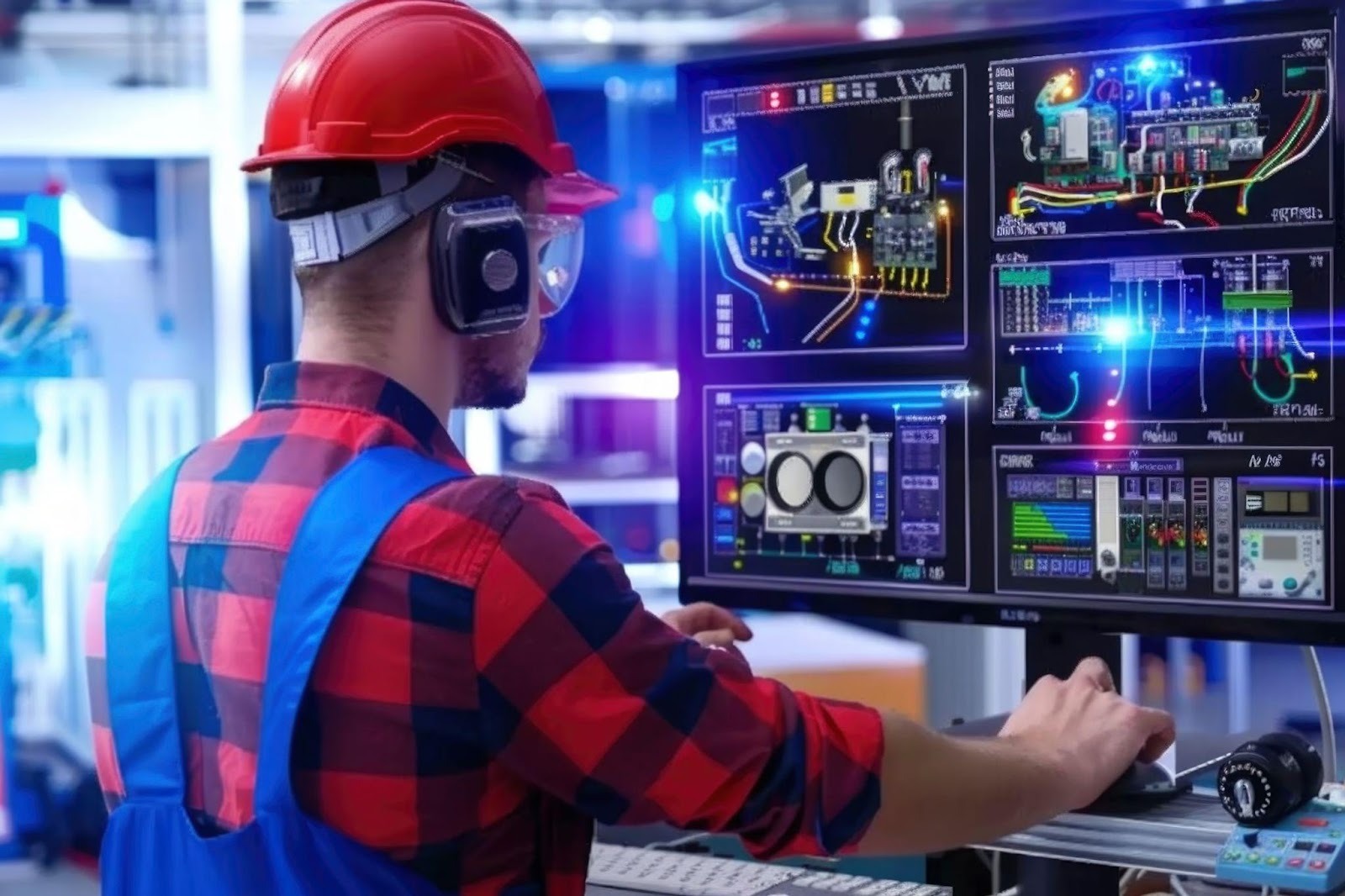
In short: The factories of the future will be full of machines that proactively manage their own maintenance.
Artificial intelligence is a system that analyzes data coming from machines, predicts failures in advance, and optimizes maintenance processes.
Predictive maintenance analyzes machine data to ensure maintenance is performed before failure occurs.
Thanks to planned and timely maintenance, unnecessary parts replacement and downtime are reduced.
IoT sensors collect data such as temperature, vibration, pressure and transmit it to artificial intelligence for analysis.
Yes, cloud-based and scalable solutions have also become accessible for SMEs (Small and Medium-sized Enterprises).
Preventive maintenance is performed at planned intervals; predictive maintenance, on the other hand, is data-driven and determined by real-time analysis.
No, it supports the human decision-making mechanism and enables more accurate data-driven decisions to be made.
CMMS is a computerized maintenance management system; it increases efficiency by digitizing maintenance processes.
The risk of data breach is minimized in systems equipped with appropriate security protocols.
Completely self-managing systems will be implemented, utilizing artificial intelligence, digital twin, and autonomous maintenance technologies.